http://ssep.ncesse.org/2013/11/316-am-est-november-9-2013-astronaut-karen-nyberg-photographs-super-typhoon-haiyan-from-international-space-station/


http://www.space.com/23546-olympic-torch-spacewalk-special-patch.html
Patch worn on spacewalk

Patch for spacewalk featured inside the ISS

37.5 Mars being the point

The patch was designed by members from exp 38:
To support flying the 2014 Sochi Olympics torch to the International Space Station, the launch of Soyuz TMA-11M was advanced to occur before the departure of Soyuz TMA-09M, leading to Expedition 37 briefly increasing to include nine crewmembers. This ISS "Expedition 37.5" crew will end with the start of Expedition 38 after only five days.
To recognize this event and celebrate the orbital Olympic torch relay, artist Blake Dumesnil worked with Expedition 38 flight engineers Mike Hopkins and Rick Mastracchio to design an "official unofficial" patch.
"It is not an official mission, but more of an acknowledgement of a unique handover between crews," Dumesnil described on Facebook. "The crew requested this for a couple of reasons: to acknowledge all nine crew members that will be aboard the ISS for the next week and the milestone leg of the 2014 Winter Olympic Torch Relay."
http://www.collectspace.com/ubb/Forum18/HTML/001105.html
The Exp 38 patch and poster also features Mars with a comet (ISON?) flyby


The Olympic torch was launched with the crew of Expedition 38 to the International Space Station on November 7
Beijing(Mars Phoenix) Sochi (ISON) olympic torch spacewalks
ISON/Torch in the hand of Richard Mastracchio
119th NASA space shuttle flight:


Rick Mastracchio and Dave Williams started the first EVA of the mission, installing the S5 truss to the station, increasing the total mass of the ISS to 232,693 kilograms (513,000 lb) (513,000 lb). The EVA duration was 6 hours and 17 minutes, and all objectives were successfully completed.
Notice the apple and Mars....
13A.1 is ISS Assembly Mission 13A.1 (which is how the ISS program refers to STS-118). 13A.1's payloads include S5, a.k.a. the S5 starboard truss segment, and ESP 3, a.k.a. the External Stowage Platform 3, both to be installed by the STS-118 (13A.1) crew on the ISS. On the 13A.1 payoad emblem, the apple is specifically in memory of Christa McAuliffe.
It was the phoenix of Challenger
STS-118 included mission specialist Barbara Morgan, the first Mission Specialist Educator. Morgan trained as the backup to Christa McAuliffe, NASA's Teacher in Space candidate from 1985 to 1986. McAuliffe was killed in the space shuttle Challenger accident on 28 January 1986. While McAuliffe and Morgan were classified as spaceflight participants and not as mission specialists in 1986, after the Teacher in Space Project was canceled, Morgan assumed the duties of Teacher in Space Designee and continued to work with NASA’s Education Division until her selection as NASA's first Mission Specialist Educator in 1998. Morgan completed two years of training and evaluation and began official duties in 2000.[15] An Educator Astronaut is a fully trained astronaut who performs all the same duties that a regular astronaut does.[16] Morgan became the first Mission Specialist Educator in space on STS-118, and will share what she learned from the experience with students during and after her flight.
STS-51-L INSIGNIA The STS-51-L crewmembers designed this insignia to represent their participation in NASA's mission aboard the Challenger, depicted launching from Florida and soaring into space to carry out a variety of goals. Among the prescribed duties of the five astronauts and two payload specialists will be observation and photography of Halley's Comet, backdropped against the U.S. flag in the insignia. Surnames of the crewmembers encircle the scene, with the payload specialists being recognized below. Surname of the first teacher in space, Sharon Christa McAuliffe, is followed by a symbolic apple.

And along with the 9/11 flag "In 2002, the Challenger flag was loaned to The Church of Jesus Christ of Latter-day Saints to be displayed in Salt Lake City during the 2002 Winter Olympic games"
Expedition 15 Commander Fyodor Yurchikhin and Flight Engineers OlegKotov and Clay Anderson welcomed the seven-member STS-118 crew
Oleg Kotov with the Sochi torch/ISON patch on 11/9 spacewalk

Fyodor Yurchikhin returned the torch

STS 118 Olympic connections by Goro:
"The inferno began on August 24, three days after Endeavour STS-118 returned to earth with an 'Olympic Torch'... depicted in its patch.

And it was clearly an Olympic torch: A) Endeavour STS-118 was launched August 8, exactly a year before the opening ceremony of the Beijing Olympics (8/8/08), and B) the Greek fires started on August 24, exactly a year before the closing ceremony (8/24/08)."
http://www.goroadachi.com/etemenanki/st_anthony-code.htm
Timing-wise, both the Beijing Olympics and the Russia-Georgia war started on August 8th ('8/8/8') - the orbital 'Lughnasadh' cross-quarter day or the halfway point between summer solstice and autumn equinox. The 'horizon' version (same halfway point but based on sunrise/set angles) shifts it to ~August 23, coinciding with the closing ceremony in Beijing (Aug. 24). These are cross quarter-driven Games in Beijing.
Spatially, Georgia is right in the middle of a region known as the Caucasus (map), where according to Greek mythology Prometheus was chained to a rock for the transgression of giving fire to mankind - the same fire the Olympic flame signifieshttp://www.goroadachi.com/etemenanki/phoenix-impact-updates.htm
STS 118 was the 119th shuttle flight and the torch relay was on 11/9. The phoenix torch in space resonates 9/11
September 29, 2013 - The Olympic flame lightning for the Winter Games in Sochi is a success.
November 7, 2013 - The Sochi 2014 Olympic Torch is sent by rocket to the International Space Station.
November 9, 2013 - Two Russian cosmonauts perform the first ever spacewalk of the Olympic Torch.
The torch returned on 11/11.... 9/29, 11/7, 11/9, and 11/11 all resonate 9/11.
Reported Nov. 7, 2013:
And it was the Phoenix:
4 WTC
“In the granite, it forms a zero, the Japanese symbol for rebirth,”
The rebirth of the WTC is symbolic of the Phoenix

The World Trade Center: Granite Construction Company is rebuilding the World Trade Center (WTC) in New York City, destroyed on September 11, 2001, during the deadliest foreign attack on US soil. The work, performed by Granite and its Phoenix Constructors joint-venture partners, named after the mythical creature symbolizing rebirth, has centered on rebuilding and expanding the WTC’s original slurry walls, reconstructing two subway lines, building new foundations, and converting the original foundations of the Twin Towers into a memorial park.
Mikhail Tyurin took the torch to space on Nov. 7, 2013.... In the Phoenix:
Astronaut Mikahil Tyurin will bring the torch into orbit

Mikhail Tyurin was in space on 9/11. The WTC was filmed from his section of the ISS
As soon as he was told of the attacks, Culbertson checked to see when they would be passing over the east coast of the U.S. Discovering that this was only some minutes away, Culbertson grabbed a camera. The window in Mikhail Tyurin's cabin turned out to be the one with the best view."
Mikhail Tyurin
A flight engineer on the international space station, he was in space with fellow Russian cosmonaut Vladimir Dezhurov and an American astronaut, Frank Culbertson, on September 11. The station passed over Manhattan during the attack, allowing them to photograph the devastation. They returned to earth three months later
It was the beginning of our working day. We were at 400 km above the earth's surface, all busy at work in different parts of the station. Suddenly Frank, who was head of the expedition, asked for us to come together quickly. He told us that two minutes ago he had a private tele-conference with the American doctor for the expedition. He [had told him there had been] a terrorist act in which hijackers had hit the [World Trade Centre] causing massive damage and many human casualties.
We wanted to see for ourselves. Our computers told us we would be over New York in 15-20 minutes. The orbit is such that you only pass over a point once in two days - an amazing coincidence.
We have a lot of videos and cameras on board, and ran all systems simultaneously. We organised filming. Frank worked with the videos. Vladimir and I took photos. I used a long lens to take a picture of Manhattan with a long plume of smoke [which became a commonly used image of the attacks].

http://www.theguardian.com/world/2002/sep/11/september112002.september1164
Mikhail Tyurin filmed the Sochi Torch spacewalk:
The spacewalking duo again took some time passing the torch back and forth while the cameras were automatically collecting imagery. Mikhail Tyurin was in position aboard ISS to take video and photos of the scene outside. After ten minutes of posing with the torch, the crew members called the end of ‘Olympic Torch Operations.’
http://www.spaceflight101.com/iss-expedition-37-russian-eva-36-updates.html
After the phoenix torch spacewalk Oleg Kotov and Sergey Ryazanskiy worked on Zvezda

For their final planned task, Kotov and Ryazanskiy deactivated the Radiometria experiment package on Zvezda. Designed to collect information useful in seismic forecasts and earthquake predictions, Radiometria was installed on the station during an Expedition 26 spacewalk in February 2011. After securing the experiment's cables, the spacewalkers headed back to the airlock to wrap up the excursion. The task to fold down and restrain Radiometria's antenna was deferred to a future spacewalk.
The duo closed the Pirs hatch at 3:24 p.m., marking the official end of the spacewalkhttp://www.nasa.gov/content/olympic-torch-highlights-station-spacewalk/
Zvezda (Russian: Звезда, meaning "star"), DOS-8, also known as the Zvezda Service Module, is a component of the International Space Station (ISS). It was the third module launched to the station, and provides all of the station's life support systems, some of which are supplemented in the USOS, as well as living quarters for two crew members. It is the structural and functional center of the Russian portion of the station - the Russian Orbital Segment.
On September 11, 2000, two members of the STS-106 Space Shuttle crew completed final connections between Zvezda and Zarya; during a 6 hour, 14 minute EVA, astronaut Ed Lu and cosmonaut Yuri Malenchenko connected nine cables between Zvezda and Zarya, including four power cables, four video and data cables and a fiber-optic telemetry cable.[12] The next day, STS-106 crew members floated into Zvezda for the first time, at 05:20 UTC on September 12, 2000
(DOS- 8), the final spacecraft from the Salyut series, became one of the first modules of the ISS, and the first module of the ISS, Russian-made Zarya, relied heavily on technologies developed in the Salyut programme.
ISiS celebrates 15th birthday (Nov. 20) with olympic crew

The International Space Station celebrates its 15th birthday today (Nov. 20), marking the day in 1998 when a Russian rocket lifted the first piece of what is now the largest manmade structure ever built in space.
The launch of the module named Zarya ("Sunrise" in Russian) kicked off an unprecedented international undertaking to build the astronaut outpost one piece at a time.
Two weeks after Zarya was carried into orbit, on Dec. 4, 1998, NASA's space shuttle Endeavour launched Unity, sometimes called Node 1, during the STS-88 mission, and the two modules were linked together.
The space station is currently occupied by the six crewmembers of the station's Expedition 38 mission. They are Japanese astronaut Koichi Wakata; Russian cosmonauts Oleg Kotov, Mikhail Tyurin and Sergey Ryazanskiy; and NASA astronauts Rick Mastracchio and Michael Hopkins.
http://www.space.com/23658-international-space-station-15th-birthday.html
The Exp 38 crew blasted off with the phoenix feather torch in a Phoenix theme Soyuz.
http://torchrelay.sochi2014.com/en/news-rt-torch-go-olympic-spacecraft-preparing-for-launchTo mark its unusual cargo, both the manned Soyuz and the rocket are decorated in Sochi Winter Olympics theme. The capsule carries the logo of the games, while the rocket was painted with a patchwork design, featuring traditional Russian images and patterns like the firebird and Gzhel designs. A torch flame is also shown on the mission patch.
The three members of the ISS Expedition 38 who man the spaceship are Russia’s Mikhail Turin, NASA’s Richard Mastracchio and Japan’s Koichi Wakata. They all are veteran space explorers doing their third or fourth flights.
The spacemen are to take part in the ongoing Olympic torch relay. They will carry a burning Sochi Games torch from their hotel to the bus which will carry them to the launch site.


Comet ISON Grows Wings

Firebird topped with ISON

September 29, 2013 - The Olympic flame lightning for the Winter Games in Sochi is a success.November 7, 2013 - The Sochi 2014 Olympic Torch is sent by rocket to the International Space Station.November 9, 2013 - Two Russian cosmonauts perform the first ever spacewalk of the Olympic Torch.
First HiRISE Images of Comet ISON

Mars rovers and satellites will get a close-up view. It’s too early to say whether Curiosity will be able to see the comet from the surface of Mars—that depends on how much ISON brightens between now and then. Lisse says the best bet is NASA’s Mars Reconnaissance Orbiter. The MRO satellite is equipped with a powerful half-meter telescope named HiRISE that is more than capable of detecting the comet’s atmosphere and tail. Observations are planned on four dates: August 20th, Sept 29th, and Oct 1st and 2nd.
http://science.nasa.gov/science-news/science-at-nasa/2013/23aug_marsison/
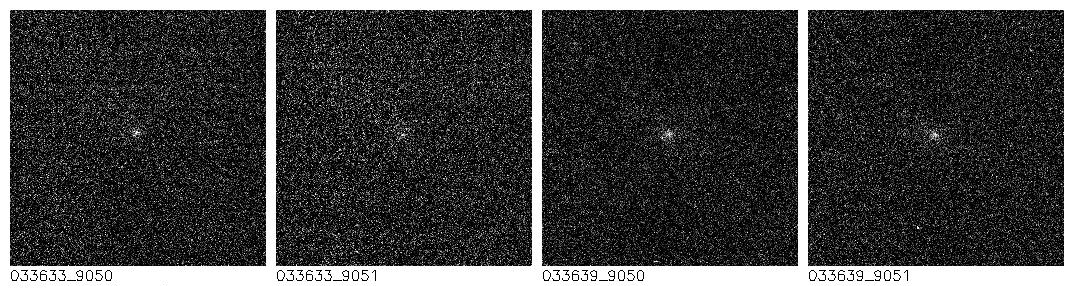
On 29 September 2013, the Mars Reconnaissance Orbiter (MRO) maneuvered to point its High Resolution Imaging Science Experiment (HiRISE) camera at ISON, a new comet passing by Mars on its way into the inner Solar System.
HiRISE saw a small spot at the position of ISON that is relatively bright, like a star, but moving relative to actual stars. The comet's coma is apparently very faint, so these data provide useful constraints on the size of the comet nucleus and its overall brightness, key measurements to understand its behavior and useful knowledge to subsequent observers.
These images show a 256 x 256 pixel patch of sky at the range to the comet of 8 million miles and when the solar phase angle is 47 degrees. Three more observations of ISON are planned for 1 and 2 October as the comet moves through closest approach to Mars at 7 million miles, but with less illumination as seen from Mars.
http://www.uahirise.org/releases/ison.php
The sun lit the Sochi flame on 9/29
Solar Filament Eruption Creates 'Canyon of Fire'These images were captured on Sept. 29-30, 2013, by NASA's Solar Dynamics Observatory, or SDO, which constantly observes the sun in a variety of wavelengths.

http://www.nasa.gov/content/solar-filament-eruption-canyon-of-fire/
Just days before and after the spacewalk we have 2 missions to mars


MAVEN and MOM Missions from NASA and India Plan Martian Science Collaboration in Orbit
http://www.universetoday.com/105772/maven-and-mom-missions-from-nasa-and-india-plan-martian-science-collaboration-in-orbit/#ixzz2kmQOX3BT
India's Martian MOM lays another perfect orbital egg
http://www.theregister.co.uk/2013/11/17/mangalyaan_fifth_orbital_boost/
Mars Needs Moms was released 3/11/11
MAVEN was selected for the post Phoenix mission
The Mars Atmosphere and Volatile EvolutioN (MAVEN) mission is a multi-corporation/agency mission for the United States and NASA designed to study changes to the Martian atmosphere.
Birthed from the now-discontinued Mars Scout Program – a program that also saw the creation, implementation, and flight of the Mars Phoenix lander last decade – MAVEN successfully survived challenges from 20 other mission proposals to gain funding for a 2013 scout mission to the red planet.
http://www.nasaspaceflight.com/2013/11/martian-atmosphere-maven-prepares-launch/
The Mars Scout Program was a NASA initiative to send a series of small, low-cost robotic missions to Mars, competitively selected from innovative proposals by the scientific community. The program had an array of missions destined to reach Mars, and study it at relatively low costs. Each Scout project was to cost less than US$485 million. The Phoenix lander and MAVEN orbiter were selected and developed before the program was retired in 2010.
Given the Phoenix connections a few interesting things to note that took place in the 10/10 time frame
- Juno flyby
-Director of Russian Federal Space Agency replaced
-ISON update
-Apollo 7 "Phoenix" anniversary
- passing of Scott Carpenter
Scott Carpenter died on the eve of Apollo 7's 45th anniversary. Mercury 7 Aurora 7 Apollo 7... 777
45th Anniversary of Apollo 7
“Flight of the Phoenix” (10/11/13) *119 days before Sochi opening ceremony


11/7 Sochi phoenix


More:
Finally I wasn't sure about adding this but it seems to fit here one way or another.
The torch was greeted at the ISS and returned to earth by a Georgian 88 days before 2/7/14


Fyodor Nikolayevich Yurchikhin (Russian: Фёдор Николаевич Юрчихин, Greek: Θεόδωρος Γιουρτσίχιν του Νικόλαου; born 3 January 1959), is a Russian cosmonaut of Greek descent and RSC Energia test-pilot who has flown on three spaceflights. His first spaceflight was a 10-day Space Shuttle mission STS-112. His second was a long-duration stay aboard the International Space Station (ISS) as a Flight Engineer for Expedition 15; for this mission he was launched in the Soyuz TMA-10 spacecraft. He has undertaken two further long-duration stays aboard the ISS, as a crew member of Expedition 24 / 25. For this mission he was launched with the spacecraft Soyuz TMA-19, and he landed in November 2010, also with the TMA-19 spacecraft. He served as Soyuz Commander for his fourth mission aboard Soyuz TMA-09M, as Flight Engineer for Expedition 36 and ISS Commander for Expedition 37.
Yurchikhin was born in Batumi, Georgian SSR (now Adjara the autonomous republic of Georgia) on 3 January 1959 to Pontic Greek parents Nikolai Fyodorovich Yurchikhin and Mikrula Sofoklevna Yurchikhina (both now reside in Sindos, Greece)
Batumi located 88 miles from Prometheus Cave

Patch on the right was updated for the torch mission. The top planet appears to be mars above the Black Sea

I found a little info about this patch
a young Fyodor, with one foot in his place of birth (Batumi, Georgia, at the border of the Black Sea). Another star symbolizes Moscow, where he followed part of his education (Moscow Aviation Institute). The 98 refers to 1998, the year he started cosmonaut training.
http://www.collectspace.com/ubb/Forum18/HTML/000767.html
“Milo”=apple in modern Greek, “Milo”=sheep in ancient Greek
Medea statue in Batumi: Golden Fleece=Golden apple

Ajara has been inhabited since prehistoric times. The first settlements belong to the Palaeolithic Age. Ajara used to be part of the earlier Georgian kingdoms of Iberia and Colchis. Famous heroes of ancient Greek mythology, such as Prometheus, Argonauts, and motives by Homer's Odyssey are associated with this area.
Jason and the Argonauts and their
Relationship to The Odyssey
Strong ties with these themes already appear with Sochi 2014.
The hollow part of the Sochi torch alludes to the hollow wood Prometheus used to keep the Olympic flame safe and the spacewalk with the torch that will light the cauldron at Sochi further resonates the Prometheus theme.
Prometheus is connected to fire and rings.... (ring of fire) so it is fitting that a seismic experiment is connected to the Prometheus torch spacewalk. Neptune is god of earthquakes!
Soyuz TMA-09M docks with the International Space Station
The manned spacecraft, equipped with Radioelectronic Technologies’ Neptune-ME system, has successfully docked with the International Space Station
http://rostec.ru/en/news/2041

3.html
Olympic torch returns home from space station


ISS Expedition 37.5 November 9, 2013

- Olympic Torch Relay in Space
- Yakor Foot Restraint Relocation (Attempted, aborted, hardware taken inside ISS)
- Installation of Foot Restraint ingress aid on VRM
- Removal of VRM&DPN Launch & Transport Bracket
- Deactivation of RK-21-8 Radiometria Experiment
Seismic activity could easily be associated with the Sochi phoenix torch. Right on cue:
ISiS celebrates 15th birthday (Nov. 20) with olympic crew

From space to volcanoes
The Olympic torch, but not the Olympic flame came back down to Earth on Monday after being taken up into space for a space walk. Three astronauts showed off the torch, apparently unharmed afer its venture into the cosmos, after landing back in Kazakhstan on Monday. The torch, needless to say, was never lit while in space for safety reasons.
- Olympic flame visits the volcanoes (ring of fire)
The Olympic flame, carried on different torches to the one taken to space, meanwhile carried on its journey around Russia, visiting the far flung regions of the Far East. It was taken round the volcano-strewn land of Kamchatka partly by sleds drawn by dogs and then to the Pacific island Sakhalin where it was welcomed by shamans from the Nivkh people.
New Island Pops Up After Volcano Eruption
A new island has surfaced off the coast of Japan, the apparent result of volcanic activity.
Experts aren’t sure when the island was created since it popped up in an uninhabited area, near the island Nishinoshima in the Sea of Japan, but smoke was seen in the area on Wednesday.
The new island is 666 feet in diameter, but Japanese officials are waiting to see if the island becomes permanent before they name it.
“It’s a matter of if it’s going to break apart,” Darcy Ogden, volcanologist and assistant professor at UC San Diego, told ABC News. “It’s made of a big pile of rocks. If they aren’t stuck together very well they will erode and break down.”
The island is located in what’s called the “Ring of Fire,” a hotbed of some 400 volcanoes spanning 25,000 miles in the Pacific Ocean.
“In the deeper ocean we know less because the activity doesn’t register on the ocean’s surface,” said Bill Chadwick, a research professor who studies submarine volcanoes at Oregon State University.
A new island off the coast of Pakistan appeared shortly after a Sept. 24 earthquake in that country. Officials are waiting to see if that island becomes permanent or sinks back into the sea.
The ring of fire on the eve of "catching fire"

http://bestcurrentaffairs.com/w/volcanic-eruption-creates-new-island/
6 Volcanoes Erupting Today in 6 Countries
http://www.theepochtimes.com/n3/366829-6-volcanoes-erupting-today-in-5-different-countries/#?photo=2&_suid=138527035493808217369059568066
Remarkable considering the "Phoenix storm" and the 11/22 "catching fire" 77 days before Sochi

11/25/2013
How Iran nuclear deal was clinched to Johnny Cash's Ring Of FireHarper's Ring of Fire comments took Ontario by 'surprise'
For their final planned task, Kotov and Ryazanskiy deactivated the Radiometria experiment package on Zvezda. Designed to collect information useful in seismic forecasts and earthquake predictions, Radiometria was installed on the station during an Expedition 26 spacewalk in February 2011. After securing the experiment's cables, the spacewalkers headed back to the airlock to wrap up the excursion. The task to fold down and restrain Radiometria's antenna was deferred to a future spacewalk
Scientific equipment CE "microwave radiometry" (on "RK-21-8") is engaged panoramic measurements of microwave radiation from different parts of the land and water surfaces using 8-beam antenna and 8-channel microwave radiometer receiver.
8-beam antenna system allows you to receive radiation from the Earth's surface eight directions defined antenna pattern formed. The average frequency of the received radiation should be in the range of 1.40 - 1.42 GHz (about 21 cm).
Deactivated on the 11/9 Sochi phoenix torch spacewalk....
Radiometria was activated by EXP 26 fitting right in with the 3/11 phoenix/mega-quake:
Spacewalkers Equip Space Station to Track Earthquakes and Lightning

Two Russian cosmonauts added new instruments to the hull of the International Space Station today (Feb. 16) – gear designed to track earthquakes, lightning and thunder on Earth.http://www.nbc.com/news-sports/msnbc-video/2011/02/cosmonauts-install-earthquake-predictor-on-iss/
Cosmonauts Dmitry Kondratyev and Oleg Skripochka floated outside of the space station at 8:30 a.m. EST (1330 UTC) and proceeded through a list of tasks that included installing and connecting two new experiments on the outside of the Russian Zvezda service module that will monitor terrestrial lightning, thunder and seismic activity.
The same day 2/16/11 the Russian & UK space agencies address the TwinSat project:
February 16-17, 2011: Moscow meeting of the TwinSat team: the discussions addressed scientific requirements and objectives, satellite design and payloads, operation and programmatic issues.

On February 17th a tripartite Memorandum of Understanding was
signed between UCL Mullard Space Science Laboratory, the Institute of Physics of
the Earth and the International Science and Technology Center on future
collaboration in the TwinSat Project that
combines Russian and UK technologies to build new generation Earth observation
satellites to monitor seismic activity such as earthquakes and
volcanoes.
The project is being run by a team of British and Russian scientists and was heralded "a new milestone in UK-Russia space collaboration" by Professor Smith
http://www.istc.ru/istc/istc.nsf/va_WebPages/Science_cafe_UK-RussiaEngThe project is being run by a team of British and Russian scientists and was heralded "a new milestone in UK-Russia space collaboration" by Professor Smith
From and including: Thursday, February 17, 2011
To, but not including Saturday, November 9, 2013
Result: 996 days
Expedition 26

It is a hexagon with flags and families [names]: two flags – American and Russian – and three families. Inside there is a silhouette of the Soyuz composed from digits, zeros and ones, above the planet flying through the Sun and some stars. And there is an outline of a crane as the backdrop of the Soyuz. The Soyuz is represented digitally out of zeros and ones with the crane.“
was the 26th long-duration mission to the International Space Station. The expedition's first three crew members – one US astronaut and two Russian cosmonauts – arrived at the station on board Soyuz TMA-01M on 10 October 2010. Expedition 26 officially began the following month on 26 November,[2] when half of the crew of the previous mission, Expedition 25, returned to Earth on board Soyuz TMA-19.[2] The rest of the Expedition 26 crew – one US astronaut, one Russian cosmonaut and one ESA astronaut – joined the trio already on board when their spacecraft, Soyuz TMA-20, docked with the station on 17 December 2010.
The commander of Expedition 25, Douglas Wheelock, handed over command of the station to Expedition 26 commander Scott Kelly on 24 November 2010. The 26 crew was joined by the crew of STS-133 on 26 February 2011,[3] and was supplied by the ESA's Johannes Kepler unmanned resupply craft, which arrived on 24 February. Expedition 26 ended on 16 March 2011 with the departure of Soyuz TMA-01M.
The 26 crew was joined by the crew of STS-133 on 26 February 2011Goro:


Unbeknownst to those living their
oblivious lives, a recent space shuttle mission Discovery
STS-133 (February-March 2011) gave us a glimpse of the "Destiny" - future written, future to be fulfilled - as it
carried "Robonaut2", the first humanoid robot in space, to the
International Space Station where it was unpacked and installed in NASA's
Destiny
Laboratory Module...
"Destiny", it whispered via the
mission patch, was for the phoenix to rise up from the Underworld...

...via a Stargate...
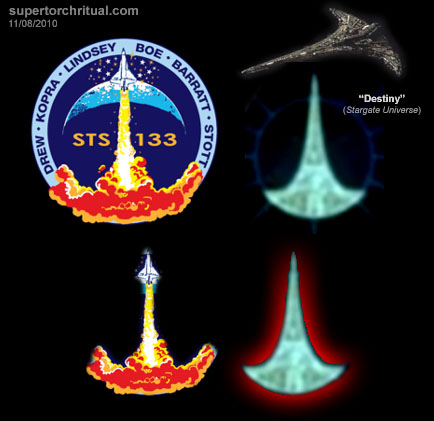
...from the Core:

The
Core (2003) - literally the Underworld -
revolves around "Project Destiny" or DESTINI - "Deep Earth Seismic Trigger INItiative" - an "earthquake machine".
In the real world, our own "Destiny" space shuttle mission STS-133 returned to earth on March 9th (2011)...
...just two days before the Japanese Birthquake. Talk about "Deep Earth Seismic Trigger INItiative"...
In the real world, our own "Destiny" space shuttle mission STS-133 returned to earth on March 9th (2011)...
...just two days before the Japanese Birthquake. Talk about "Deep Earth Seismic Trigger INItiative"...
http://www.goroadachi.com/etemenanki/lucifers_destiny.htm

Talk about "Data Around Us"

Another Sochi hint. NASA's Destiny module was launched on February 7, 2001 aboard the Space Shuttle Atlantis on STS-98.
http://en.wikipedia.org/wiki/Destiny_(ISS_module
Destiny was on the first shuttle launch in 2001 "new millennium".
STS-98 launch (2-7-01)
http://www.youtube.com/watch?v=3SYKL2nsx9Q
Another event that also takes place in the 1st week of February 2014 :
Super Bowl XLVIII will be the 48th edition of the Super Bowl in American football, and the 44th annual championship game of the modern-era National Football League (NFL). It is scheduled to be held on February 2, 2014, at MetLife Stadium at the Meadowlands Sports Complex in East Rutherford, New Jersey, to determine the champion for the 2013 season. This will be the first Super Bowl to be played outdoors in a cold weather environment,[3] the first in 38 years to be played outdoors on artificial turf, and the first in which two US states (New York and New Jersey) will work together with hosting duties.[4] It will also be the first Super Bowl to have two host teams (the New York Giants and New York Jets), as both play in the same stadium, and it will be the first Super Bowl played on February 2 since the game was permanently moved to the month of February in 2004.
Super Bowl XLVIII will be the first Super Bowl intentionally held at an open stadium in a "cold-weather" city; previous Super Bowls in cold-weather cities were held at indoor stadiums.
Bruno Mars Will Perform at Super Bowl
http://www.rollingstone.com/music/news/bruno-mars-will-perform-at-super-bowl-20130908
RHIC is set to begin the 14th year of operation on 3 February 2014 with the cool down of the RHIC magnets to 4.5 degrees Kelvin (451 degrees below zero Fahrenheit). This year we will concentrate our effort on full energy (100 GeV/n x 100 GeV/n) gold-gold collisions to further study the "perfect liquid" formed in these collisions. Both the STAR and PHENIX experiments are again operational for this run. The plan, budget permitting, is to run through June 2014 before taking a break for maintenance and upgrades.
Beam operation: expected to begin 6 February 2014
http://www.c-ad.bnl.gov/esfd/status.htm

Perfect Liquid=Black holes

Blackhole substances are perhaps the most-perfect fluids in existence because they have ultra-low viscosity.
http://www.spacedaily.com/news/blackhole-05n.html
Sochi=Black Sea



No comments:
Post a Comment